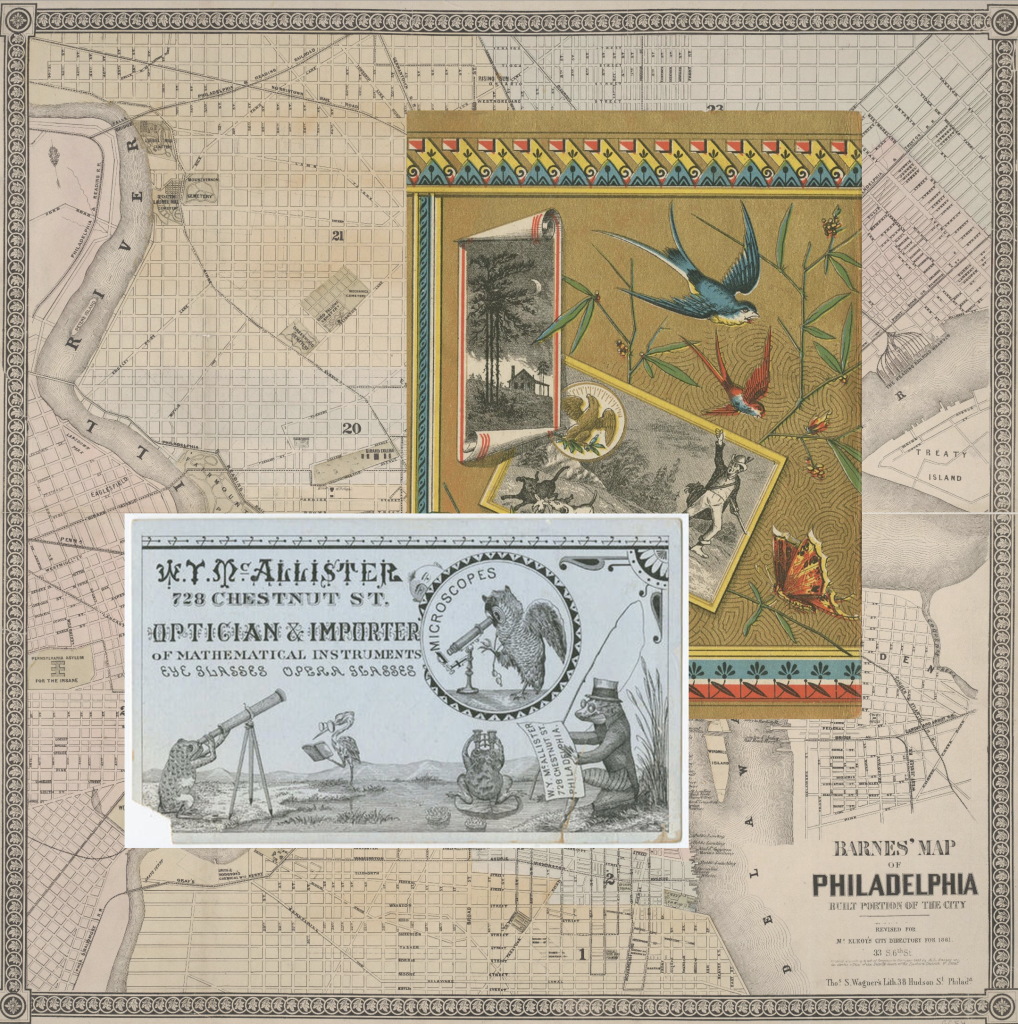
This week we’ll consider what constitutes the “local” and what counts as “media,” and we’ll introduce ourselves to one another by sharing media that embody the local “vibe” or character — however we define it — in the geographically distributed places from which we’ve all come.
To Read for Today:
- What counts as “local,” and why does it matter? Read excerpts from Christopher Ali, “Introduction: Where Is Here?” and “Mapping the Local” in Media Localism: The Policies of Place (University of Illinois Press, 2017): 3-22 and 30-49. Ali emphasizes policy, which won’t be our primary focus for the semester (in part because policy certainly isn’t my area of expertise!), but these introductory chapters offer a capacious critical framework that can help to guide our thinking, and remind us that any conceptualization of “the local” — whether we think of it as a geographic scale, a market, a community, or some other unit — has political implications.
- Skim over the table of contents for Agnes Gulyas and David Baines’s The Routledge Companion to Local Media and Journalism (Routledge, 2020) to get a sense of the variety of topics and global localities other scholars have studied. I’m not asking you to read the book, but if it does pique your interest, you can access the full text through Penn Libraries!.
- One of our collective projects for the semester is to create a field guide to Philadelphia’s local media. I’m sure you’ve seen field guides for trees and birds, but what might it mean to create a field guide for media? Check out my “Cloud and Field,” Places Journal (August 2016). I’ll share some more current examples in class, and we’ll talk more about our field guide throughout the semester.
To Do for Today:
- Please choose a date for your Reading Response!
- Introduce yourself to the rest of us by sharing a local medium that exemplifies the place you call “home,” or any locality to which you have a strong connection. You might choose a particular journalist or zine or radio program, a TikToker featuring local restaurants, a favorite band that embodies the local “scene,” a striking public sign (or a ghost sign!), a radical media collective or community wireless co-op. There’s no wrong way to do this! We simply want to learn about you and appreciate the breadth of geographic insights and media interests we bring to our collective endeavors this semester.
- Please post your contribution to our collaborative Google Slide deck (you’ll be prompted to log in via your upenn.edu account) before class starts on Week 2. Each of you can contribute three slides:
- A title slide with your name, pronouns, major, year, and any other details you’d like us to know about you; feel free to add graphics, if you like!
- A slide on which you depict your chosen case study via images, audio, video, text, etc;
- A final slide on which you can briefly describe — in 150 words or fewer! — what, to you, makes your selection “local,” and what it says about your particular locality.
- Please try to have fun with this 😉
- You’ll each have five minutes to share in class.
- Please post your contribution to our collaborative Google Slide deck (you’ll be prompted to log in via your upenn.edu account) before class starts on Week 2. Each of you can contribute three slides:
Supplemental Resources:
- Christopher Ali, Alex Intner, and Amanda Lotz, “Local Media: A Conversation with Christopher Ali,” Media Business Matters Podcast (July 28, 2018) [podcast: 37:34].
- Miranda Joseph, Against the Romance of Community (University of Minnesota Press, 2002).
- Casey Plett, On Community (Biblioasis, 2023).